
New Report: 2,300 NYC Properties Vulnerable to Deed Fraud, Concentrated in Queens and the Bronx
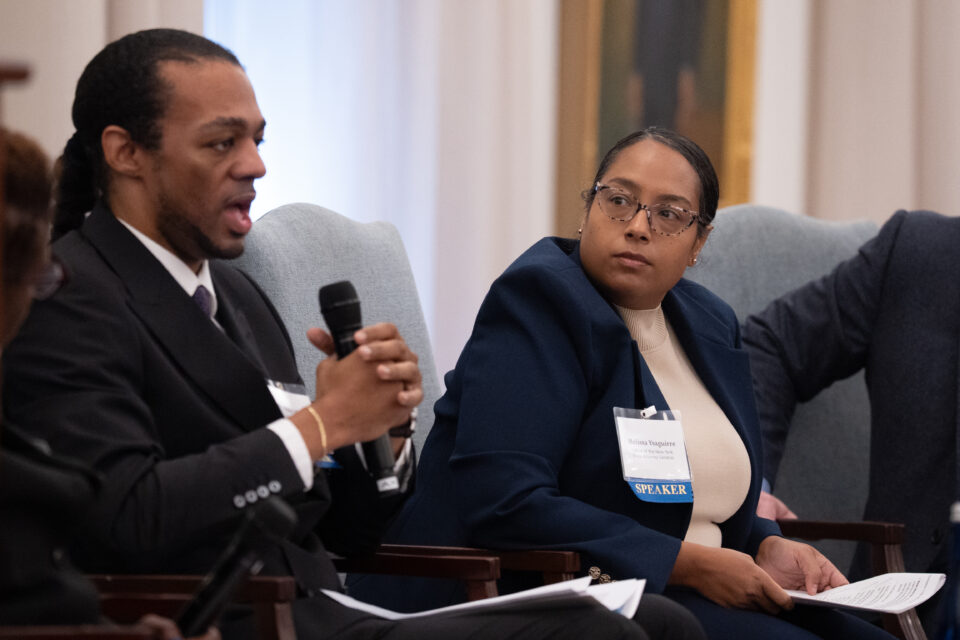
A total of 2,300 New York City households are at high risk of unclear home title issues and may be vulnerable to scams and deed theft, according to new research by the NYU Furman Center. Those households live in neighborhoods that typically have higher shares of Black homeowners, including in southeastern Queens and the Bronx.
For many New Yorkers, homeownership represents their most significant investment and a valuable asset to pass on to the next generation. As homeowners age and home values appreciate rapidly, incomplete property records and title issues may make some homeowners vulnerable to exploitation. When ownership or other property records are unclear, residents may be more susceptible to title-related complications, legal challenges, or pressure to sell under unfavorable terms.
“Homeownership just isn’t this idea of owning a home, a physical place,” said Peter White, Director of the Mayor’s Office of Deed Theft Prevention, for NYC’s Department of Finance, during a panel discussion at the NYU Furman Center’s Policy Breakfast held on November 17. “It’s stability. It’s an opportunity. So many of the individuals that are victims have a substantial amount of equity that they have obtained through years and years of homeownership. It represents generational wealth.”
The NYU Furman Center’s report found a total of 2,300 high-risk properties in New York City, with over 50 percent located in Queens. The Bronx had the highest share of high-risk properties as a percentage of 1-3 unit residential properties with a human owner (rather than an LLC or other entity). Researchers classified properties as “high-risk” if an owner of record is deceased and either no deed was recorded against the property at all, or the most recent deed was at least 30 years old.
“When a title is unclear, it can be difficult for owners to lay claim to and fully leverage the value of their home,” said Brad Greenburg, NYU Furman Center’s Executive Director, during a presentation of the updated research findings. “A clear title is often required to use the property as collateral for a loan, enroll in tax relief programs, or otherwise use the home as a financial asset, and properties with an unclear title cannot receive FEMA disaster recovery funds or enroll in many home repair programs.”
The Impact of Deed Fraud on Black Homeowners in NYC
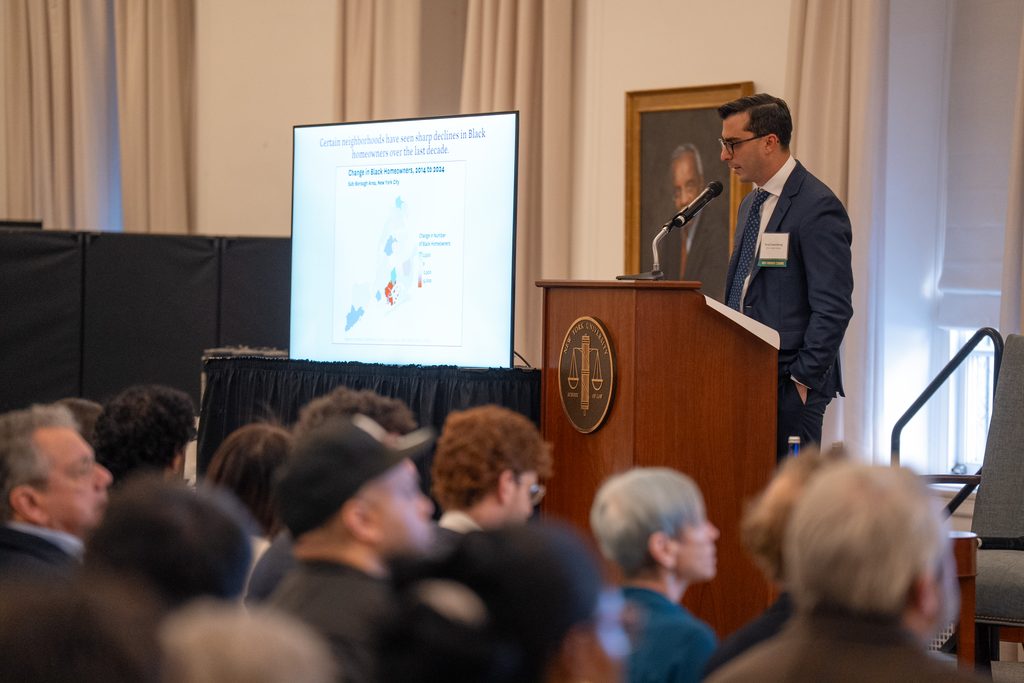
Across New York City, Community Districts with the highest number of high-risk 1-3 family properties also had higher shares of Black, Asian, and foreign-born residents compared to the rest of the city. This comes as New York City’s Black homeownership rates have remained largely unchanged over the past decade with pockets of concentrated declines in the number of Black homeowners in Flatlands/Canarsie, Jamaica/Hollis, parts of Central Brooklyn, and parts of the Bronx.
In the neighborhood of Jamaica/Hollis in Queens, the neighborhood has lost more than 3,500 Black homeowners over the last decade. Meanwhile, in the neighborhood of Flatlands/Canarsie, the number of Black homeowners declined by 33 percent since 2014.
“As we have seen, certain neighborhoods in the city have seen notable declines in Black homeownership,” said Greenburg. “There are a lot of factors that may be contributing to these trends. Many homeowners choose to sell their homes and benefit from the sale. However, particularly as homeowners age and home values appreciate rapidly, incomplete property records and title issues may make some homeowners vulnerable to exploitation.”
Vanessa Perry, Professor of Strategic Management & Public Policy at George Washington University’s School of Business and a Non-Resident Fellow at Urban Institute’s Housing Finance Policy Center said the trends seen in New York City are part of a growing national issue in terms of closing the homeownership gap.
“We’re still very much in the same place that we’ve been in more than five decades ago,” said Perry, referring to the 1968 Fair Housing Act. “But now the issue is actually losing the ground that we’ve achieved.”
Michael Corcoran, Director of the Homeowner and Consumer Rights Project at Queens Legal Services, said it’s critical to look at the historical context, noting that redlined communities like Jamaica, Queens were denied access to fair mortgage credit, and then later were sold predatory and expensive loans.
“Most of the clients that I work with are dealing with loans that have been modified and subsequently fallen behind on that were originated during the crisis, and so when you add in an aging population and the challenges that are presented by growing older, retirement, fixed-income, it becomes increasingly unmanageable,” said Corcoran.
How Lack of Estate Planning Leaves NYC Heirs Vulnerable
When a homeowner dies without proper estate planning, which establishes a clear transfer of property ownership to their heirs, that’s often when title issues can occur especially among multigenerational homes. That means in the absence of a valid and legal will, the deceased’s property could be divided into fractional interests held by different heirs.
“There’s a lack of information about inheritance law and estate planning, and so people think that ‘Oh, I live with my daughter, my daughter is going to inherit the home when I die,’” said Corcoran. “And that is not necessarily what is going to happen. If there’s no plan and the transition isn’t mapped out, the consequences of that can be irreparable.”
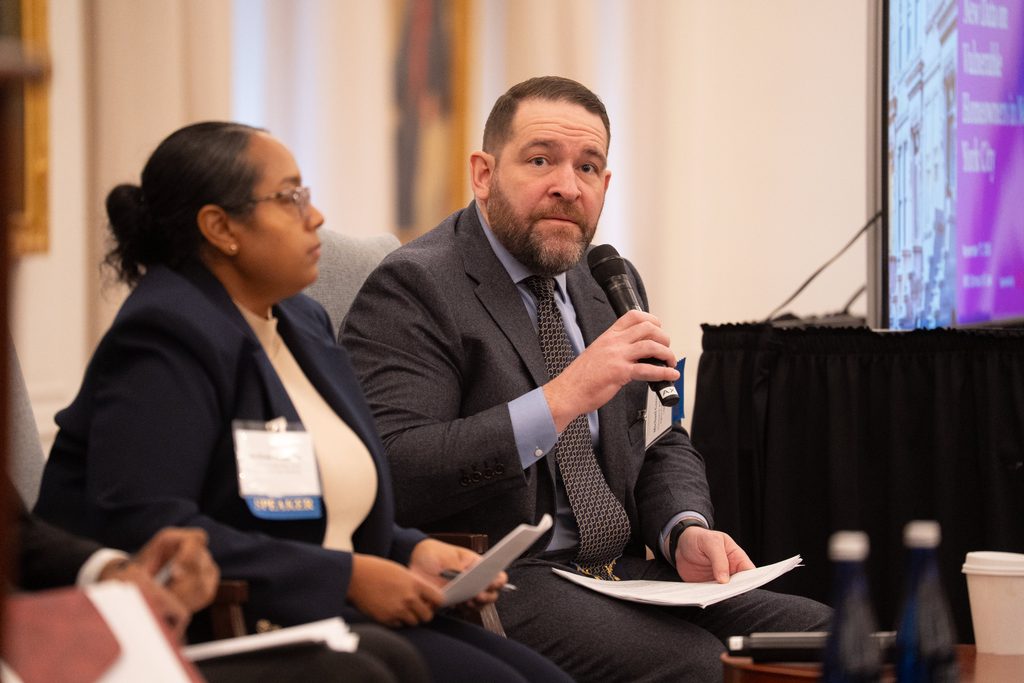
Melissa Ysaguirre, Special Counsel for the New York State Office of the Attorney General, added that cases where fractional interest splinters across the deceased owner’s heirs is not only administratively complex, but will leave family members vulnerable to predatory schemes meant to strip them of their ownership.
“It’s really common for multiple generations of people living in a home that their family has had for a significant amount of time for their possession and ownership to be threatened by an estranged heir who has been paid a small sum of money from a real estate speculator who’s trying to work their way into the title and record a new deed,” said Ysaguirre. The speculator may then use litigation to strip the remaining fractional interest holder of property rights.
Furman Center researchers also found that properties at high-risk for title vulnerabilities are almost seven times more likely to be included on the tax lien sale list or to be more than $500 delinquent on their property taxes.
Panelists noted that this is not a coincidence as scammers often target these households with a record of financial distress, and called for policymakers to reevaluate the tax lien sale. “The tax lien sale list puts on notice the world of homes where there is financial difficulties,” said Corcoran. “It becomes essentially a prospective list of vulnerable people that people who have the sole goal of making money target.”
Rise in LLC Property Transfers Raises Deed Fraud Concerns
In addition to identifying high-risk properties, researchers at the Furman Center relied on a name-classification model to identify deed transfers from a homeowner to an entity, like an LLC, that occurred between 2015-2025. They found that the number of human-to-entity transfers has grown in recent years since falling during the pandemic, and in 2025, there were more than 6,000 transfers for the first time since before 2020. Many of these transfers were concentrated in community districts in eastern Queens and Brooklyn.
“We are definitely seeing a significant increase in the complaints that we receive related to deed fraud, deed theft, and other equity-related types of scams targeted at homeowners,” said Ysaguirre. She noted that most complaints were typically tied to properties that had not been transferred for 30 years with accumulated equity.
A transfer of ownership to an LLC may not be a clear indicator of fraud. However, there has been an increase over time in transfers flagged due to a break in the chain of title, particularly in certain communities. It’s raised concerns about higher levels of risk in those communities and points to areas where additional community outreach and legal services may be warranted, researchers noted. The lack of transparency surrounding these LLCs has also made it difficult for agencies to identify anomalous activities and repeat offenders.
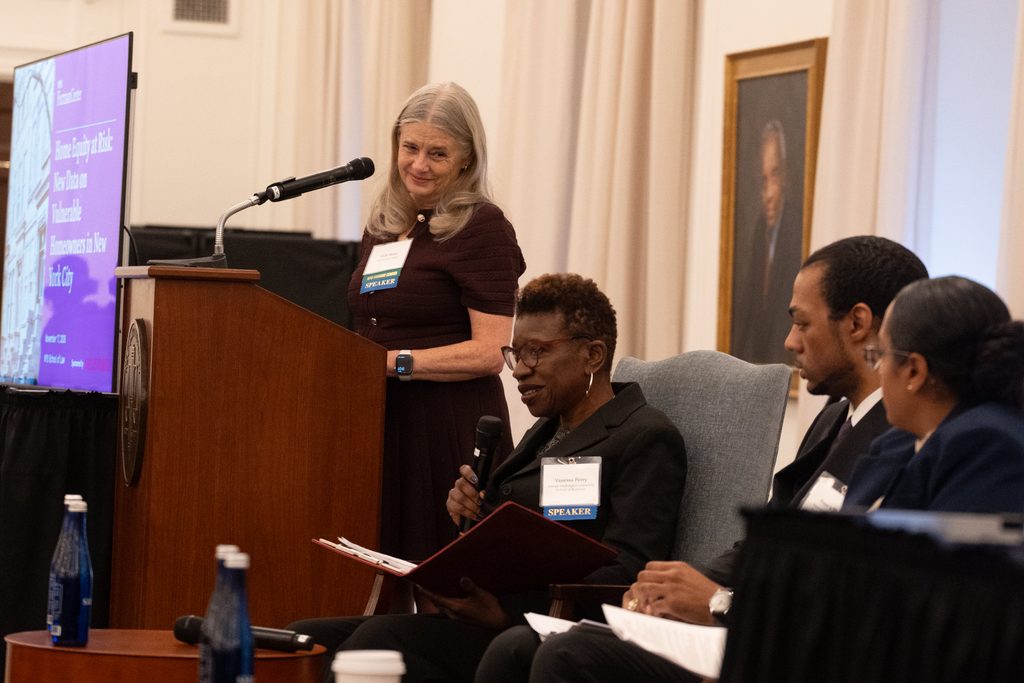
“The problem is the data that we need to be able to really identify these owners,” said Perry. “From a national perspective, being able to identify who these transactions involve has been very difficult.”
Corcoran emphasized the need for regulatory oversight and additional reporting standards for LLCs. “An LLC should not be allowed to buy a one- to three- family property anywhere in New York City without disclosing everybody who is a member of the LLC, and that should be public knowledge,” he said. “You have to pierce that corporate veil because it’s very hard to track bad actors if you don’t know who they are.”
While new enforcement measures and laws have been put into place in New York City to conduct criminal investigations, panelists agreed on the need for more state resources in education and legal services as well as sufficient and stable funding for comprehensive legal services, including estate planning and administration, with the goal of keeping people in their homes with clear access to maintain their equity and generational wealth.
“I’ve seen how homeownership really affects individual families, and not just one generation, multiple generations, but entire neighborhoods,” said White. “We’re working to ensure that people stay in their homes, and collaborating with services, law enforcement, and everyone else we can to make sure we address this issue.”